Common Forex Scams and How to Avoid Them

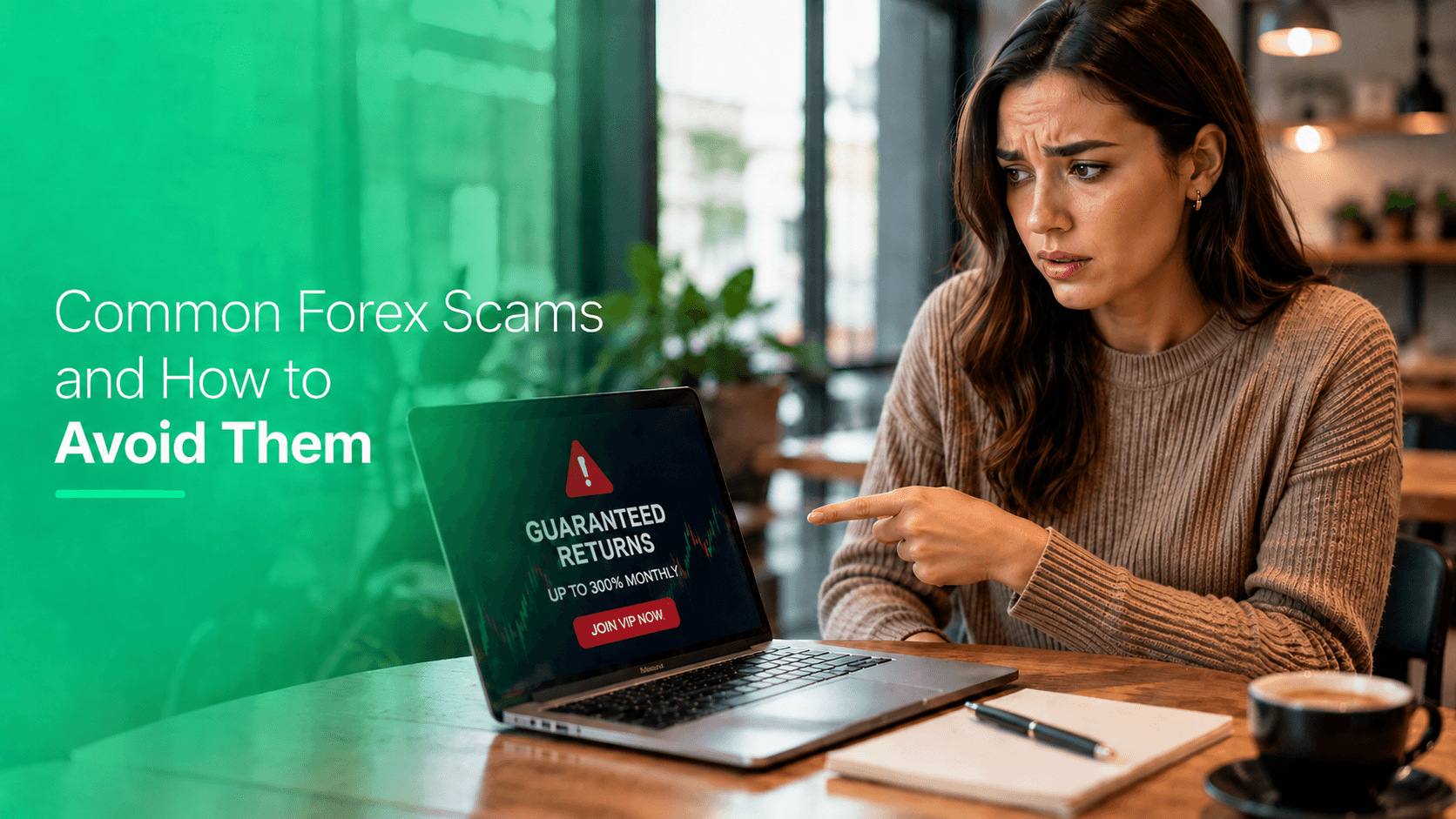
Common Forex Scams and How to Avoid Them
Forex trading can be a legitimate way to access the global currency market. It is also one of the areas where scammers often target beginners with fake promises, fake platforms, and misleading claims.
The problem is simple: many new traders enter forex hoping to make money quickly. Scammers know this. They use polished websites, social media ads, fake testimonials, and aggressive sales tactics to make their offers look real.
This guide breaks down the most common forex scams, the warning signs to watch for, and the steps you can take before depositing your money with any broker, signal provider, or trading service.
What Are Forex Scams?
Forex scams are fraudulent schemes that use currency trading as the hook. These scams usually promise easy profits, guaranteed returns, or access to a secret trading method.
Some forex scams come from fake brokers. Others come from signal sellers, account managers, social media “trading mentors,” or fake investment platforms. In many cases, the scam does not involve real trading at all. The platform may only show fake balances on a dashboard to make victims believe their account is growing.
The goal is usually the same: get you to deposit money, push you to deposit more, then block or delay withdrawals.
Why Forex Scams Are So Common
Forex is attractive to scammers because it is global, fast-moving, and often misunderstood by beginners. A scammer does not need to explain much. They only need to show screenshots of profits, luxury lifestyles, and fake client payouts.
Many beginners also find it hard to check the difference between a real broker, an offshore broker, and a fake platform. This gives scammers room to hide behind technical terms, copied licenses, and vague company details.
The forex market itself is risky, but a scam adds another layer of danger. You are no longer only dealing with trading risk. You may be dealing with a company or person that never intended to return your funds.
Common Forex Scams Traders Should Know
1. Fake Forex Broker Scams
Fake forex brokers are one of the most common scams in the industry. These websites often look professional. They may show trading platforms, account types, customer support pages, and even fake regulatory information.
The scam usually starts with a small deposit. After that, the broker may show fake profits inside your account. Once you try to withdraw, problems begin. They may ask for extra fees, taxes, verification charges, or another deposit before releasing your money.
Warning Signs of a Fake Forex Broker
A broker may be suspicious if:
- It promises guaranteed profits
- It has no clear company address
- Its license cannot be verified on the regulator’s website
- It pressures you to deposit quickly
- It blocks or delays withdrawals
- It only accepts crypto or unusual payment methods
- Its customer support becomes silent after you request a withdrawal
A real broker should make its company name, regulatory status, risk disclosure, trading conditions, and withdrawal process easy to check.
2. Guaranteed Profit Scams
No one can guarantee profits in forex trading. Currency prices move based on many factors, including interest rates, economic data, central bank policy, liquidity, and global news.
Scammers often use phrases like:
- “Guaranteed daily profit”
- “100% win rate”
- “Risk-free forex trading”
- “Double your money in 7 days”
- “Make passive income from forex”
These claims are designed to remove your doubt. In reality, every trading strategy can lose money. Even professional traders have losing trades.
A serious trading service should explain the risks, not hide them.
3. Forex Signal Seller Scams
Forex signals are trade ideas that tell traders when to buy or sell a currency pair. Some signal providers are legitimate, but many are not transparent about their performance.
A scam signal seller may post winning trades only, delete losing trades, use demo account results, or fake screenshots. They may claim to have an advanced strategy but never show verified trading history.
The biggest red flag is a signal provider that sells certainty. Forex signals are not magic. They are opinions based on market analysis, and they can be wrong.
How to Check a Forex Signal Provider
Before paying for signals, check:
- Do they show verified results from a third-party platform?
- Do they explain their risk management?
- Do they show losing trades too?
- Are their claims realistic?
- Do they pressure you to join quickly?
- Do they tell you how much you could lose?
A signal provider that only talks about profit is not giving you the full picture.
4. Managed Account Scams
Managed account scams happen when someone offers to trade forex on your behalf. They may call themselves a professional trader, account manager, fund manager, or mentor.
The scammer usually asks you to send money directly to them or deposit into a platform they control. They may show fake returns at first to build trust. After that, they push you to deposit more.
The danger is high because you may lose control of your funds. In some cases, the “account manager” is not trading at all.
Red Flags in Managed Account Offers
Be careful if someone:
- Promises fixed weekly or monthly returns
- Asks you to transfer money to a personal wallet
- Refuses to provide verified credentials
- Does not explain trading risk
- Claims losses are impossible
- Pushes you to recruit friends or family
If someone wants to manage your money, their registration, track record, fees, and authority to handle client funds must be easy to verify.
5. Clone Broker Scams
Clone broker scams copy the name, logo, license number, or website style of a real regulated broker. This can trick traders into thinking they are dealing with a legitimate company.
The fake website may look almost identical to the real one. The scammer may also use email addresses, phone numbers, or WhatsApp accounts that look official.
This is why you should never trust a broker only because it shows a license number on its website. Go directly to the regulator’s website and search for the company yourself.
How to Avoid Clone Broker Scams
Check these details carefully:
- The legal company name
- The website domain listed by the regulator
- The email address listed by the regulator
- The phone number listed by the regulator
- The license status and permissions
- Any warnings from regulators
If the contact details on the broker’s website do not match the regulator’s record, stop immediately.
6. Withdrawal Fee and Tax Scams
Some scam brokers let you deposit easily but make withdrawals nearly impossible. When you request your money, they may claim you must pay a tax, processing fee, wallet activation fee, anti-money laundering fee, or account upgrade fee.
This is a common tactic. The scammer is trying to take more money before disappearing.
A legitimate broker may charge certain trading or withdrawal fees, but these should be clearly stated in advance. They should not suddenly demand large extra payments before releasing your funds.
7. Social Media Forex Scams
Social media has become one of the biggest channels for forex scams. Scammers use Instagram, TikTok, Facebook, Telegram, WhatsApp, and YouTube to attract beginners.
They often show luxury cars, expensive watches, fake payout screenshots, and emotional stories about financial freedom. The content is designed to make trading look easy.
A common pattern is:
- You see a trader showing huge profits online
- They invite you to message them privately
- They ask you to deposit with a broker or investment platform
- Your account shows fake profits
- You are asked to pay more before withdrawing
- The scammer blocks you or disappears
Real traders do not need to pressure strangers online with unrealistic profit claims.
8. Forex Robot and Expert Advisor Scams
Forex robots, also known as Expert Advisors or EAs, are automated trading tools. Some are legitimate, but many are sold with exaggerated claims.
Scam robot sellers often promise hands-free profit, no losses, or high monthly returns. They may use backtests that look good but fail in real market conditions.
Backtests can be manipulated by choosing ideal settings, limited time periods, or unrealistic trading conditions. A profitable backtest does not guarantee future performance.
Before buying a forex robot, check live verified results, drawdown, risk settings, refund policy, and user feedback from independent sources.
9. Education and Mentorship Scams
Forex education is not a scam by itself. Many traders pay for courses, mentorship, and communities to improve their skills.
The scam begins when educators sell unrealistic outcomes. They may promise that you will become profitable in a few days, quit your job quickly, or copy their exact strategy to make consistent income.
Good forex education should teach risk management, psychology, market structure, strategy testing, and realistic expectations. It should not sell a shortcut.
Red Flags in Forex Mentorship Offers
Watch out for mentors who:
- Focus more on lifestyle than skill
- Avoid showing real trading history
- Promise fast income
- Use fake urgency to sell courses
- Blame students for every loss
- Push students to use a specific broker without clear disclosure
A good mentor should help you think better, not make you dependent on them.
How to Avoid Forex Scams
Avoiding forex scams starts with slowing down. Scammers want you to act quickly. Your job is to verify everything before sending money.
1. Check the Broker’s Regulation
Before opening an account, check if the broker is registered with the relevant regulator. Do not rely only on the broker’s website.
For example:
- Traders in the U.S. can check broker registration through NFA BASIC
- Traders in the UK can check firms through the FCA Financial Services Register
- Traders in other regions should check their local financial regulator
Make sure the legal company name, website, and contact details match the regulator’s records.
2. Read the Withdrawal Policy
A broker can look attractive until you try to withdraw. Before depositing, read the withdrawal terms carefully.
Check:
- Minimum withdrawal amount
- Processing time
- Withdrawal fees
- Required verification documents
- Payment methods
- Any bonus terms that may block withdrawals
Avoid brokers that make withdrawal rules vague or confusing.
3. Be Careful with Bonuses
Some brokers offer bonuses to attract new traders. A bonus is not always bad, but it can come with strict terms.
For example, you may need to trade a large volume before withdrawing. In some cases, scammers use bonuses as a reason to block your funds.
Before accepting any bonus, read the conditions. If the terms are unclear, avoid it.
4. Avoid Anyone Promising Guaranteed Returns
This is the simplest rule: if someone guarantees profit, walk away.
Forex trading involves risk. Market conditions change. No broker, signal provider, robot, or mentor can remove that risk.
A realistic service will talk about potential losses, drawdown, and risk management.
5. Search for Independent Reviews
Do not rely only on testimonials shown on the broker’s website. Search for independent reviews, user complaints, regulatory warnings, and withdrawal feedback.
Look for patterns. One bad review does not always prove a broker is a scam, but repeated complaints about blocked withdrawals, fake profits, or aggressive account managers should be taken seriously.
6. Test Customer Support Before Depositing
Contact customer support before opening an account. Ask direct questions about regulation, withdrawals, fees, account verification, and trading conditions.
A reliable broker should answer clearly. A suspicious broker may avoid details, rush you to deposit, or give generic responses.
7. Start Small
Never deposit more than you can afford to lose. If you are testing a broker, start with a small amount and try making a withdrawal before adding more funds.
This does not guarantee safety, but it can help you spot problems early.
8. Keep Records of Everything
Save emails, chat messages, deposit receipts, withdrawal requests, account screenshots, and transaction IDs.
If something goes wrong, these records may help when reporting the issue to your bank, payment provider, or regulator.
What to Do If You Think You Have Been Scammed
If you suspect a forex scam, stop sending money immediately. Do not pay extra “taxes,” “release fees,” or “verification charges” to unlock your funds.
Take these steps:
- Save all evidence
- Contact your bank or payment provider
- Report the broker or person to the relevant financial regulator
- Change passwords if you shared login details
- Avoid recovery scams that promise to get your money back for an upfront fee
Many victims are targeted again by fake recovery agents. Be careful with anyone who contacts you claiming they can recover your funds quickly.
Final Thoughts
Forex scams are common because scammers know how to target hope, fear, and inexperience. They make trading look simple, safe, and guaranteed. Real trading is none of those things.
Before trusting any broker, signal provider, robot, or account manager, take time to verify their background. Check regulation, read withdrawal terms, search for independent reviews, and avoid anyone promising guaranteed profit.
The safest mindset is simple: if an offer sounds too good to be true, treat it as a warning sign.
FAQs About Forex Scams
How do I know if a forex broker is a scam?
A forex broker may be a scam if it is not properly regulated, hides company details, promises guaranteed profits, delays withdrawals, or pressures you to deposit more money. Always verify the broker through the official regulator’s website before opening an account.
Can forex signals be a scam?
Yes. Some forex signal providers use fake results, edited screenshots, or demo account performance to sell subscriptions. A trustworthy signal provider should be transparent about losses, risk, and verified performance.
Are all offshore forex brokers scams?
No, not all offshore brokers are scams. The risk is that some offshore brokers operate with weaker oversight. Always check the broker’s license, legal entity, trading conditions, and withdrawal history before depositing.
What is the biggest red flag in forex trading?
The biggest red flag is guaranteed profit. Forex trading is risky, and no one can promise fixed returns without risk.
Can I recover money from a forex scam?
Recovery depends on the payment method, timing, and the scam structure. Contact your bank or payment provider as soon as possible. You should also report the scam to the relevant regulator. Be careful with recovery agents who ask for upfront fees.

Related Posts

CMC Funded Is Titanium Sponsor of London Prop Trading Expo
CMC Funded, the new simulated evaluation programme from CMC Markets, is Titanium Sponsor of the London Prop Trading Expo on 23 and 24 October 2026. The programme also named Verichain as its first referral partner, with a $100,000 simulated evaluation that leads to an interview.

FundedTrading Heads to London Prop Trading Expo 2026 as Official Media Partner
FundedTrading joins the London Prop Trading Expo 2026 as Official Media Partner, with on-site coverage October 23–24 and 50% off tickets using code FT50.